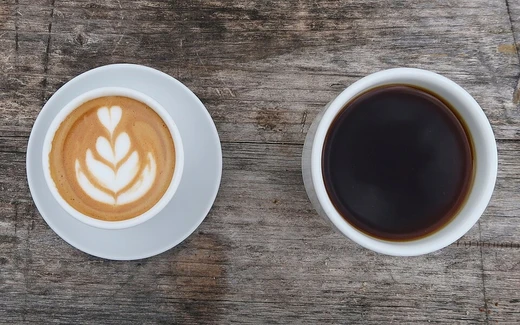
Espresso
Concentrated Italian coffee brewed under high pressure.
Espresso is a concentrated form of coffee produced by forcing hot water under high pressure through finely ground coffee beans. Originating in Italy, it has become one of the most popular coffee-brewing methods worldwide, characterized by its small serving size of 25–30 ml and a distinctive layer of foam called crema. Espresso serves as the base for many other coffee drinks and plays a central role in coffee shop culture and the third-wave coffee movement.
- origin
- Italy
- first patent
- 1884 by Angelo Moriondo
- first commercial machine
- 1905 by Desiderio Pavoni (based on Luigi Bezzera's patents)
- key innovation
- High-pressure extraction (12 atmospheres) via lever-operated piston by Achille Gaggia in 1947
- typical serving size
- 25–30 ml
- typical extraction time
- 25–30 seconds
- alternate spelling
- expresso (common in France, Portugal, Spain; considered a variant in English)
Lore & Background
Coffee arrived in Italy in the 16th century, and by the mid-19th century it was drunk as drip coffee at home and infused coffee in cafés. In 1884, Angelo Moriondo of Turin patented a steam-driven coffee machine that brewed in bulk, likely the first Italian bar machine to control steam and water separately. In 1901, Luigi Bezzera of Milan filed a patent for a machine that brewed individual servings using a boiler and portafilter, producing coffee 'expressly' for the customer. Desiderio Pavoni purchased Bezzera's patents in 1903, modified the design, and began selling machines in 1905, generally considered the first commercial espresso machines. These early machines produced coffee at a rate of around 100–150 cups per hour but used steam at around 1.5 bars, yielding a burnt, bitter taste without crema.
Reader's Guide
Espresso's significance lies in its role as both a standalone beverage and the foundation for drinks like cappuccino, caffè latte, and americano. Its cultural impact extends beyond consumption, central to coffee shop culture and the third-wave coffee movement, which emphasizes artisanal production and high-quality beans. The quality of an espresso depends on factors such as grind size, water temperature, pressure, and the barista's skill in tamping. Despite a widespread myth, espresso can be made with various roast levels, not just dark roast. The spelling 'espresso' gained prominence by the 1970s, though 'expresso' remains common in some regions and is considered a variant by major dictionaries. The word itself conveys both 'pressed-out' and 'expressly for you', reflecting the method and the individualized service.
Did You Know?
- The first commercial espresso machines, sold by Desiderio Pavoni in 1905, produced coffee at a rate of around 100–150 cups per hour but lacked crema due to low pressure (1.5 bars).
- Modern espresso, using hot water under pressure as pioneered by Achille Gaggia in the 1940s, was originally called 'crema caffè' due to the crema.
- Espresso contains more caffeine per unit volume than most coffee beverages, but its typical serving size results in less caffeine per serving than larger drinks like drip coffee.
- The alternate spelling 'expresso' has been used since at least the 1920s and is common in France, Portugal, and Spain, though it is considered a variant by the Oxford English Dictionary and Merriam-Webster.
Frequently Asked Questions
What is Espresso?
Espresso is a small, intensely concentrated coffee shot created by forcing hot water at high pressure through a compacted bed of finely ground beans. It originated in Italy and is typically served in 25–30 ml portions crowned by a layer of foamy crema.
Who invented the espresso machine?
Angelo Moriondo filed the first espresso-related patent in 1884, while Desiderio Pavoni built the first commercially available machine in 1905 using Luigi Bezzera's earlier designs. The lever-piston system that defines modern espresso extraction was introduced by Achille Gaggia in 1947.
How long does it take to make a proper espresso shot?
A standard extraction runs for roughly 25 to 30 seconds, during which about 12 atmospheres of pressure push water through the coffee puck. The result is a small 25–30 ml serving topped with a layer of crema.
What is crema and why does it matter?
Crema is the golden-brown foam that forms on top of a well-extracted espresso shot as a byproduct of the high-pressure brewing process. Its presence is widely regarded as a visual indicator that the shot was pulled correctly.
Why is Espresso so central to coffee shop culture?
Because it acts as the base ingredient for lattes, cappuccinos, and many other popular drinks, espresso underpins the entire menu of a typical café. It also anchors the third-wave coffee movement's emphasis on precise technique and bean quality.
More in Coffee 1-15
Spotted an error? Know more?
This is a living reference — every entry is fact-audited, and reader corrections feed straight into our audit queue. Suggest an edit · See this site's audit record